
CPD-Accredited Retreats for Nurses: Why This Is the Career Investment Most Nurses Miss
The Career Investment Category That Does Not Exist in Most Nurses' Awareness
Ask most nurses how they earn their CPD hours and you will hear the same answers. Online modules. Conference attendance. Mandatory training. Study days.
Ask whether they have attended a CPD-aligned leadership retreat and most will look at you with a mix of interest and confusion. They did not know that was a thing. Or they assumed it was a thing for other kinds of professionals, not for nurses.
It is a thing. It is real. It contributes verified hours to your CPD portfolio within the NMBA framework. And for nurses who are genuinely invested in developing as leaders and recovering as human beings, it consistently delivers more transformation per hour than any other CPD format they have tried.
This article explains what CPD-aligned nursing retreats are, how they work, and why the gap between what they deliver and how rarely nurses access them is one of the most significant missed opportunities in the Australian nursing development landscape.
What Is a CPD-Aligned Nursing Retreat?
A CPD-aligned nursing retreat is an immersive professional development experience that combines structured leadership education, reflective practice, peer learning, and wellbeing within a program structured to meet NMBA's CPD framework requirements.
The retreat format adds the dimension that standard CPD activities lack: immersion. The separation from the working environment, the concentration of development activity over two to three days, and the intensive peer connection that happens when nurses step out of their daily roles and into a space designed for genuine reflection.
How CPD Works for Retreats
NMBA's CPD framework requires nurses and midwives to complete a minimum number of CPD hours per registration period, with a defined proportion in interactive learning activities. Well-designed retreat programs satisfy the interactive learning requirement because they involve structured facilitation, group discussion, case-based learning, and reflective practice rather than passive content consumption.
The specific hours claimable for a retreat program depend on the program duration and content. A two-day retreat program typically generates between 12 and 16 structured CPD hours. Responsibility for determining relevance and claiming CPD hours rests with the individual nurse or midwife, consistent with NMBA guidance.
Not all retreats are designed with CPD in mind. When evaluating a retreat program, ask specifically whether it provides structured learning activities and documentation of CPD hours you can include in your NMBA portfolio.
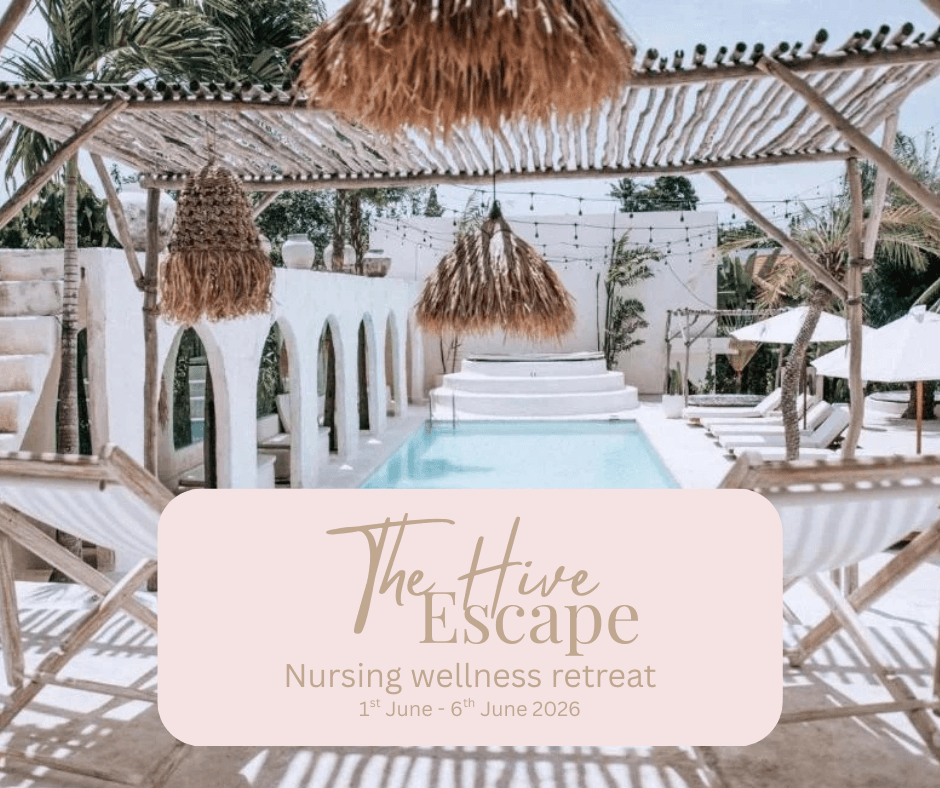
Important note: The Hive Nursing Development does not certify CPD on behalf of NMBA or AHPRA. The Hive Experience Retreat provides structured learning activities suitable for inclusion in a participant's CPD portfolio. The retreat is NMBA-aligned and provides 15 structured CPD hours. Always check the current NMBA CPD guidance for your registration category.
What You Actually Gain at a Leadership Retreat
The outcomes nurses consistently describe from CPD-aligned leadership retreat experiences go significantly beyond what the formal documentation captures:
Perspective that the working environment actively prevents: the ability to see your professional situation from a distance, with clarity rather than reactivity
Community with other nurses at similar career stages, creating connections that often persist well beyond the retreat
Renewal of professional purpose, which is distinct from rest and distinct from formal education: it is the reanimation of why you chose this profession
Specific leadership insights and skills from structured education sessions designed for the nursing context
Physical and psychological restoration that the working week does not provide even with adequate annual leave
Structured CPD hours that contribute toward your NMBA registration requirements

The Difference Between a Retreat and a Conference
The difference is not primarily about comfort or location. It is about design intent.
A conference is designed to disseminate information to a large audience. It is primarily a receiving experience: content delivered from stage to audience, interactions happening at margins, learning outcomes dependent on individual uptake.
A retreat is designed to create transformation in a small group. It is primarily a participatory experience: facilitated reflection, peer exchange, skill practice in real time, and community built through shared experience. The group size is intentionally limited because the learning model requires genuine connection, not conference-floor networking.
The Hive Experience Retreats, for instance, are capped at ten participants specifically because the program's design requires each participant to be genuinely known by the facilitator and by their peers. That is not possible in a group of 90.
Who Benefits Most from Retreat-Based Development
CPD-aligned retreats are particularly valuable for nurses who are:
In burnout recovery and needing more than rest to return to sustainable professional engagement
At leadership transition points where structured reflection and peer connection would accelerate the transition
Experiencing professional stagnation and needing perspective and renewed direction
Seeking CPD hours but wanting development that is genuinely transformative rather than merely compliant
Ready to invest seriously in their career but wanting to do so in a human and community-oriented format
What the Research Says About Immersive Learning
The evidence base for immersive learning experiences, relative to episodic formal education, is consistently positive. Key findings include:
Immersive learning produces stronger retention of skills and insights than equivalent time in formal classroom settings
The combination of peer learning, expert facilitation, and experiential application produces better leadership development outcomes than instruction alone
Recovery benefits from immersive retreat experiences — including cortisol reduction and emotional regulation improvement — are measurable at three and six months post-retreat in controlled studies
Peer connections formed in structured small-group retreat settings show higher long-term retention rates than connections made in conference environments

Frequently Asked Questions
Can I claim tax deductions for attending a nursing leadership retreat?
This is a question for your accountant rather than for THND, as tax treatment of professional development expenses varies by individual circumstances. In general, CPD-aligned professional development expenses for nurses may be deductible as self-education expenses where they maintain or improve skills required for your current work. Consult a registered tax professional for advice specific to your situation.
What if I cannot afford a retreat right now?
Many retreat programs offer payment plans and early bird pricing. Some employers will fund or co-fund retreat attendance as professional development. It is also worth considering the relative cost: a retreat that produces genuine professional momentum and burnout recovery often costs less — financially and personally — than the cost of staying stuck for another twelve months.
How do I know if a retreat provides NMBA-aligned CPD?
Ask the provider directly: Does this program provide structured CPD hours aligned with the NMBA framework? What are the specific CPD activities and hours? Can you provide documentation for my CPD portfolio? Legitimate providers will answer these questions clearly.
Join The Hive Nursing Development email community to receive retreat dates, program information, and early access opportunities. Visit thehivedevelopment.com.au

The Hive Nursing Development © 2026 | About Us | Contact Us | Privacy Policy | Terms & Conditions


